
Health communication
CONTENTS
Herbal medicines in the treatment of hair loss potential, limitations, and emerging therapeutic trends
1. The “Life Cycle” of a Hair Strand
Hair growth does not occur continuously but rather in recurring cycles. According to medical literature, each cycle consists of three main phases:
- Anagen phase (growth phase): lasts from 2 to 6 years and represents the period of most active hair growth.
- Catagen phase (transition phase): lasts approximately 3 weeks, during which hair growth ceases and the hair follicle begins to regress.
- Telogen phase (resting phase): lasts from 3 to 9 months, during which the hair shaft remains loosely anchored in the follicle before shedding and initiating a new cycle.
-
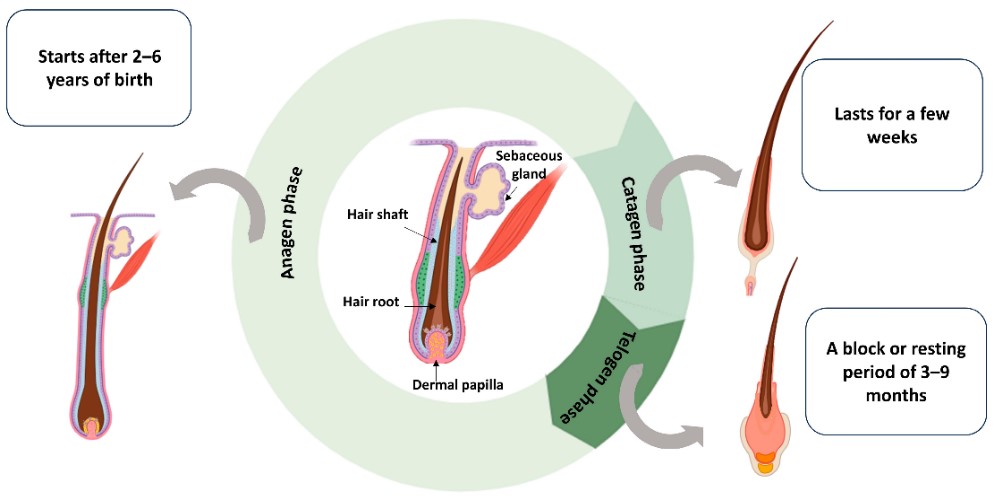
Figure 1. Hair structure and the hair cycle at different stages.
Under normal conditions, approximately 50 to 100 hairs are shed each day. However, disruption of this cycle may lead to pathologic hair loss, such as anagen effluvium (interruption of the growth phase due to chemotherapy or medications) or telogen effluvium (more than 100 hairs entering the resting phase daily due to stress or hormonal changes).
2. Effects of Plant Extracts on the Hair Cycle
Plant extracts act on hair follicles through two principal protective and stimulatory mechanisms:
a. Prolongation of the anagen phase
Rather than allowing the hair follicle to enter the resting phase prematurely, plant-derived bioactive compounds may:
- Prolong the hair growth period: by promoting dermal papilla cell proliferation and extending the anagen phase, thereby allowing the hair shaft to reach its maximum length.
- Activate hair-growth signaling pathways: by stimulating important signaling cascades such as WNT/β-catenin, SHH, and growth factors including VEGF and IGF-1, thereby enhancing follicular activity.
- Representative medicinal plants: ginseng, Polygonum multiflorum (Fo-ti/He Shou Wu), and Eclipta prostrata.
b. Prevention of premature entry into the telogen and shedding phase
Hair loss often occurs when the hair cycle is abnormally shortened. Plant extracts may help protect the hair follicle by:
- Inhibiting hair loss–associated hormones: through inhibition of the enzyme 5α-reductase, thereby reducing the conversion of testosterone to dihydrotestosterone (DHT), the principal factor involved in follicular miniaturization and hair loss in both men and women.
- Providing anti-inflammatory and antioxidant effects: by reducing oxidative stress and inflammatory reactions in the scalp, thereby preventing premature apoptosis of follicular cells.
- Representative medicinal plants: rosemary, green tea, perilla, and garlic.
3. Limitations of Plant Extracts
Although widely favored for their relative safety and lower incidence of adverse effects compared with synthetic drugs, plant extracts still face major limitations:
- Limited clinical efficacy: due to poor aqueous solubility, lipophilicity, and large molecular size, which make it difficult for active compounds to penetrate the skin barrier and reach the hair follicle.
- Safety concerns: some extracts may cause adverse reactions such as contact dermatitis, allergy (e.g., garlic, onion, aloe vera), insomnia (e.g., green tea), or hepatotoxicity at high doses (e.g., Eclipta prostrata, basil-related herbal species).
4. New Directions
a. Nanotechnology (Nanocarriers)
Nanotechnology is transforming the therapeutic approach by overcoming the limitations of herbal penetration:
- Outstanding advantages: nanocarrier systems can improve solubility, enhance active-compound stability, provide controlled release, and enable targeted delivery to hair follicles.
- Representative delivery systems:
- Niosomes: non-ionic nanovesicles that facilitate deeper penetration through the stratum corneum and more efficient delivery to hair follicles than conventional extract formulations.
- Mesoporous silica nanoparticles: possess an optimized porous structure for drug loading and good biocompatibility. Studies combining zinc/copper and quercetin (derived from onion) in these nanoparticles have demonstrated superior hair growth effects.
- Lipid–polymer hybrid nanoparticles: combine the stability of polymers with the cellular uptake properties of lipids, thereby sustaining prolonged drug release.
- A breakthrough combination: combining herbal-loaded nanoparticles with microneedling may reduce dosing frequency and significantly enhance hair growth efficacy compared with conventional approaches.
-
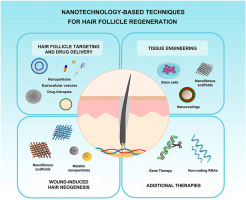
Figure 2. Nanotechnology in the treatment of hair loss.
b. 3D Bioprinting
Three-dimensional bioprinting opens a new era in regenerative medicine by enabling the creation of hair structures that closely resemble natural follicles:
- Reconstruction of a three-dimensional microenvironment: unlike traditional two-dimensional culture, 3D bioprinting creates a spatial environment that allows stem cells and dermal papilla cells to interact more effectively, closely mimicking the layered architecture of the skin and hair follicle.
- Generation of functional hair follicles: researchers have successfully bioprinted spheroids derived from dermal papilla cells to form follicle-like structures, which can then be grafted into the skin to stimulate actual hair growth.
- 3D-printed microneedles: precisely designed to deliver herbal compounds deep into the scalp with minimal pain, and can be integrated with artificial intelligence (AI) to predict drug-release patterns.
- Integration of AI and machine learning: AI can be used to analyze scalp conditions, predict hair-loss patterns, and optimize the design of individualized 3D-printed constructs.
The combination of the therapeutic effects of natural medicinal compounds with technological breakthroughs such as nanotechnology and 3D bioprinting not only opens a new chapter in the treatment of hair loss, but also offers hope for personalized, safe, and sustainable solutions for human health.
REFERENCES
Elnady, R. E., Abdon, M. S., Shaheen, H. R., Eladawy, R. M., Azar, Y. O., & Al Raish, S. M. (2025). The future of alopecia treatment: plant extracts, nanocarriers, and 3D bioprinting in focus. Pharmaceutics, 17(5), 584.
MSc. Nguyen Dinh Thi Thanh Tuyen
MSc. Hoang Duc Thuan
